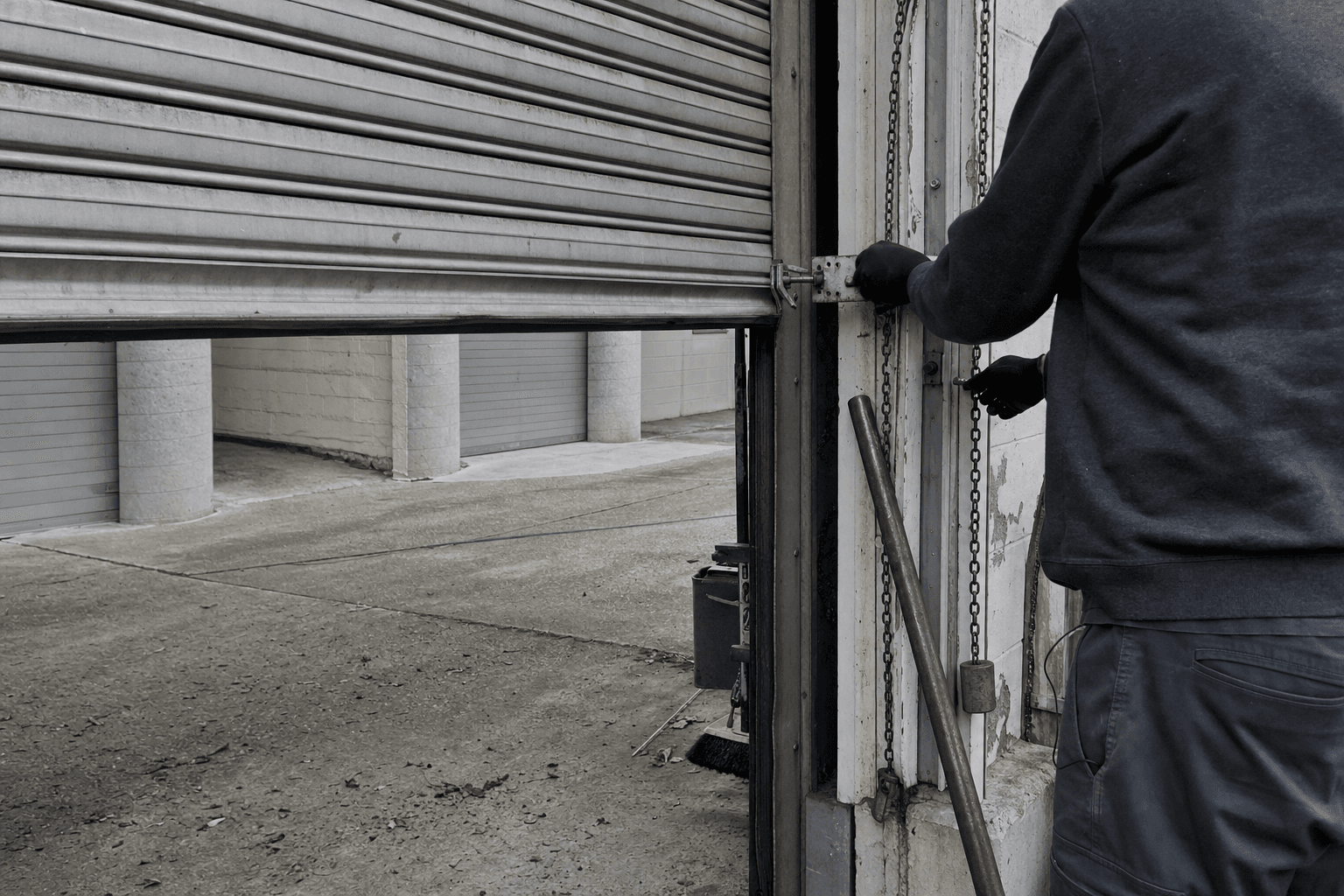
A rolling steel door that won't stay up or is hard to lift usually has lost spring tension, or something is dragging in the guides. Check for a bent bottom bar, dented slats, rust or debris in the guides, and a curtain that sits crooked. Don't adjust spring tension yourself. Most adjustments and slat repairs take a few hours. A new curtain takes longer.
A rolling steel door should lift with modest effort and stay where you leave it. If yours drifts down, slams, or takes two hands to raise, something has changed. This article covers the usual causes, what you can check safely, and what a repair involves.
It applies to storefront shutters, storage unit doors and service counter shutters in Richmond. It does not cover house garage doors.
The short answer
Most rolling steel doors are balanced by a spring inside the barrel at the top of the opening. That spring carries most of the curtain's weight. When it loses tension, the door gets heavy and may not hold its position.
The second common cause is friction. A curtain that rubs in bent or rusty guides feels heavy even when the spring is fine.
With Halloween three days away, many Richmond storefronts will stay open later and see more foot traffic. A door that drops on its own is a risk to staff and customers, so it is worth sorting out before the weekend.
What to check from the floor
You can learn a lot without touching the spring. Stand back and look at the door, then run through this list.
- Does the curtain hang straight, or is one side lower than the other?
- Is the bottom bar bent, or is the weather strip torn or worn flat?
- Are any slats dented from a cart, a vehicle or a delivery?
- Can you see rust, flaking paint or debris in the guides?
- Does the door catch at the same spot every time it moves?
- Does it feel heavier at the bottom of the travel, or all the way up?
Write down what you see. It helps the technician and it helps you decide how urgent the repair is.
Common causes and what they feel like
Lost spring tension
The door feels heavy to lift and may creep down once you let go. Tension drops over time as the spring wears. A door that used to stay open at waist height now falls.
Jammed or bent guides
The curtain catches, scrapes or stops partway. Guides get bent by impact and clogged by grit or leaves. In a rolled-up state the curtain can also wander sideways and rub.
Bent bottom bar or dented slats
An impact can twist the bottom bar. The door then lifts unevenly and binds in one guide. A few dented slats can stop the curtain from rolling cleanly onto the barrel.
Rust
Rust adds friction in the guides and weakens slats over time. It also seizes moving parts that should turn freely.
Motor problems
On motorized doors, a motor that hums but doesn't move the curtain is a separate fault. The drive may be slipping or the door may be jammed. Don't keep pressing the button. That can burn out the motor.
Why Richmond doors rust and sag sooner
Richmond is flat, open and close to the water. Wind comes in off the Strait of Georgia, and the high water table keeps the ground and concrete damp through the wet season. That moisture sits at the base of the guides and the bottom bar.
Storefronts in Steveston and along the Hamilton and East Richmond commercial strips often see this first. Rust starts at the bottom of the guides and works up. Storage units and service counters near the water show it as well.
City Centre around Brighouse has a lot of newer retail at street level, where shutters get daily use. Frequent cycling wears springs and guides faster, whatever the neighbourhood.
What you can safely do yourself
Keep it simple.
- Clear leaves, grit and litter out of the guides.
- Wipe down the guides with a dry cloth.
- Look for loose fasteners and report them.
- Stop using a door that scrapes, drops or leans.
- Put a sign on it so staff don't force it.
What to leave alone
Don't adjust spring tension yourself. A wound spring stores a lot of force and can injure you if it slips. Don't pry at bent guides or hammer on dented slats either. You can make the curtain harder to repair, or damage the lock.
Don't prop a heavy door up with a ladder or a stack of boxes. If it drops, it can hurt someone.
What a repair usually involves
A technician will first check the curtain, guides and bottom bar, then the spring tension and the lock. Typical work includes:
- Resetting spring tension so the door holds in any position.
- Straightening or replacing guides.
- Replacing damaged slats or a bent bottom bar.
- Fitting a new weather strip.
- Cleaning and treating rusted parts, or replacing them if the metal is too far gone.
Most adjustments and slat repairs take a few hours. A new curtain takes longer. For a retail unit, work can be planned around opening hours so the door is out of use for as little time as possible.
Keeping it from coming back
Clean the guides when the wet season starts. Check the bottom bar and weather strip after any impact. Have the door looked at on a schedule, especially if it cycles many times a day. Small fixes cost less than a replaced curtain.
When to call a professional
Call a professional if the door won't stay up, drops on its own, binds in the guides, or has a bent bottom bar. Call if you see heavy rust or hear the motor hum without the curtain moving. If the door is a security point for your business, a quick visit is worth it before the problem gets worse.